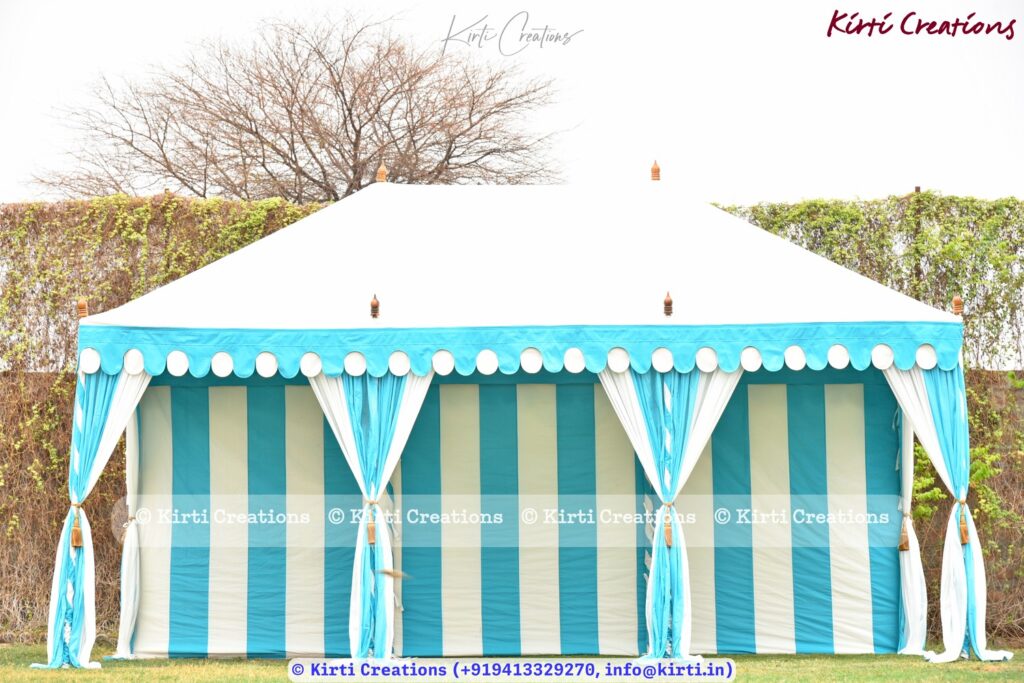
When we hear the word “royalty,” visions of sparkling palaces, large gardens, and extravagant feasts immediately come to mind. However, in the Middle East, there exists another emblem of royalty of equal value—a stunningly designed khema in royal life.
Even today, the khema continues to serve as a gathering space where culture, history, and elegance converge. It stands as a symbol of hospitality, the continuity of heritage, and the artistry of fine craftsmanship.
The Journey from Nomadic Living to Royal Grounds
At one time, the khema lay at the heart of desert life. Nomadic tribes carried them across endless dunes, raising them wherever the trail ended. These tents were essential for survival, but they also reflected pride, with vivid colours, patterned fabrics, and intricate designs bringing character to each one.
As royal families adopted the khema, its meaning deepened. No longer a necessity, the khema in royal family life came to symbolise status, respect, and cultural pride. Within palace grounds, they became thoughtfully planned spaces for celebrations, ceremonies, and personal escapes.
To this day, khemas are a signature feature of royal family compounds, gracing gardens, courtyards, and desert retreats as a living link between tradition and modern elegance.
A Royal Expression of Hospitality
In Arab culture, hospitality is a core value, and among royals, it is regarded as both a responsibility and a refined practice. The Khema serves as the ideal venue to extend this tradition, offering guests comfort, elegance, and a personal touch. Its design fosters warmth and dignity while encouraging genuine connection.
While the vast halls of palaces may impress with grandeur, they often lack intimacy. In contrast, the khema in royal family compounds creates a more personal atmosphere, making it the preferred space for welcoming dignitaries, meeting tribal chieftains, or sharing moments with close companions.
A Stage for Celebration
From weddings to national celebrations, khemas become majestic theatres of festivity. Draped in flowing canopies, illuminated with golden lanterns, and layered with rich carpets, they capture the very spirit of celebration. For special occasions, these tents are further adorned with flowers, crystal chandeliers, and handcrafted furniture, transforming them into spectacular venues.
A celebration within a khema is unlike any ballroom experience. It carries the romance of tradition, the warmth of shared space, and the magnificence of royal architecture. It is no surprise that the Khema in royal family events remains a preferred choice for commemorating life’s most treasured moments.
Fusing Heritage with Contemporary Comfort
One of the most remarkable qualities of the Khema is its ability to evolve over time. While its origins lie deeply rooted in Bedouin tradition, modern khemas are enriched with the luxuries of contemporary living.
Air-conditioned interiors, ambient lighting, plush seating, and private dining areas create an aura of comfort, while ornate embroidery, brocade drapes, and classic Arabian motifs preserve authenticity.
The Khema in royal family settings is, therefore, not merely a cultural symbol but a living testament to how heritage gracefully adapts to the needs of modern life.
The Artistry of Royal Khemas
What makes a royal khema truly exceptional is the craftsmanship poured into its creation. It is far more than a simple structure. Every fabric, every stitch, and every design is chosen with care. Skilled artisans dedicate countless hours to weaving patterns that reflect Arabian heritage while meeting the expectations of royalty.
Lanterns, carved wooden tables, and textiles in warm desert tones all contribute to its artistry. Each khema tells not only the story of the royal household it belongs to but also of the craftsmen behind its making. This devotion to detail ensures that the Khema in royal family circles is not merely architecture, but a living work of art.
Why Does Khema Still Matter Today?
Even in an age of skyscrapers and luxury hotels, the khema remains important in royal life because of its symbolism. It reflects humility, desert traditions, and Arab identity, while also offering a regal yet intimate stage for celebration.
From desert shelter to palace treasure, the khema embodies resilience, artistry, and heritage. For monarchs, it is more than a tent—it is memory, culture, and hospitality preserved through generations. This is why the Khema in royal family traditions remain significant even today.
At Sultan Tent, we bring this legacy to life with custom-designed khemas. Partner with us to create a space where tradition meets modern luxury, crafted just for you.